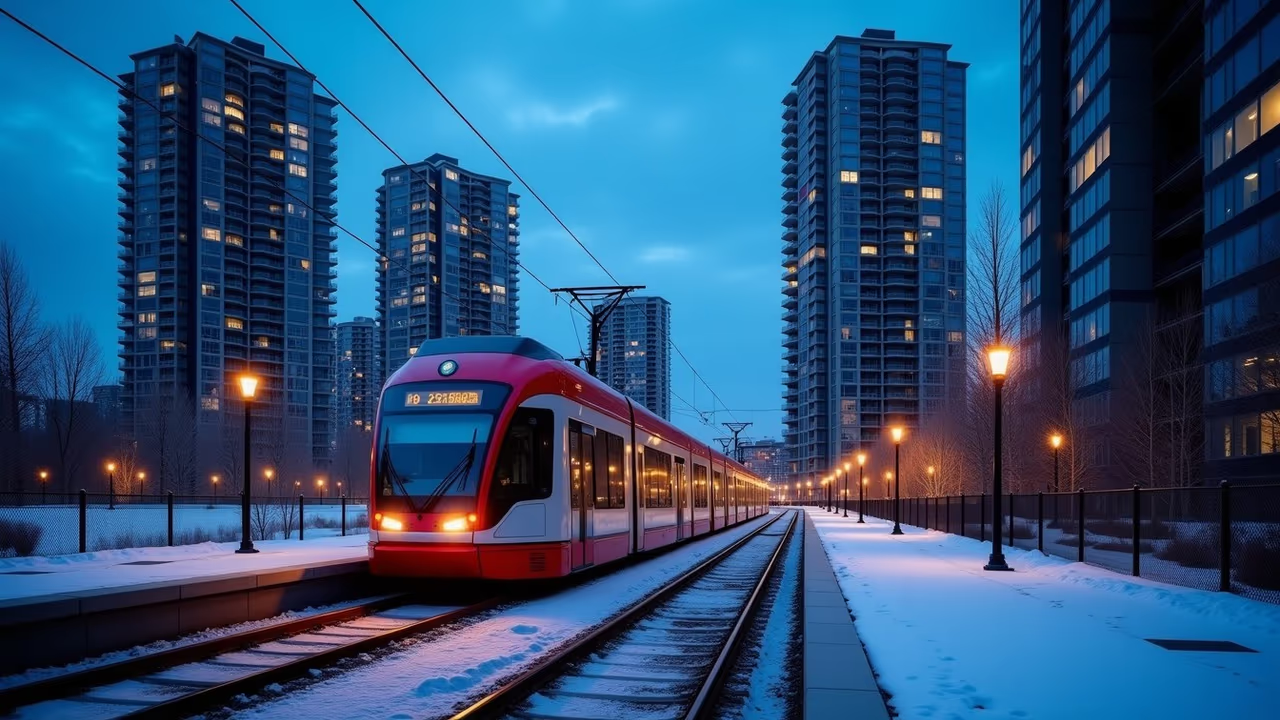
A new demographic analysis reveals that Canada cannot rely on a single development style to solve its housing shortage. Both suburban expansion and inner-city infill are critical to meeting diverse housing needs. While transit-oriented developments are highly valued, urban data shows that only about 6 percent of land in cities with rail transit sits within 800 meters of a station, even though these areas house roughly 29 percent of all urban dwellings and 25 percent of the transit-accessible population.
The research highlights a stark demographic split between transit-proximate areas and outlying suburbs. Neighborhoods close to transit stations are heavily dominated by renters, who make up over half of the local population compared to less than a third in other areas. Furthermore, small multi-family units make up two-thirds of the housing stock near transit hubs, attracting younger, single-income households. In contrast, growing families seeking larger, more affordable square footage continue to drive the demand for suburban single-family homes.
For Calgary buyers and investors, this data underscores that a one-size-fits-all property strategy does not work. Investors targeting rental income may find strong demand in high-density transit corridors, while families looking for long-term stability and space will continue to find better value in Calgary's expanding suburban communities.
Sources: Financial Post